Showing posts with label Die Brücke. Show all posts

Saturday, March 7, 2015

Emil Nolde

Emil Nolde (7 August 1867 – 13 April 1956)


An Old Lady


Emil Nolde (7 August 1867 – 13 April 1956) was a German Danish painter and printmaker. 
He was one of the first Expressionists, a member of Die Brücke, and is considered to be one of the great oil painting and watercolor painters of the 20th century. 
He is known for his vigorous brushwork and expressive choice of colors. 
Golden yellows and deep reds appear frequently in his work, giving a luminous quality to otherwise somber tones. His watercolors include vivid, brooding storm-scapes and brilliant florals.

Wednesday, August 27, 2014

Karl Schmidt-Rottluff (German, 1884 - 1976)

Village Corner (Dorfecke), 1910


Watt bei Ebbe [Mud flat at low tide], 1912


Malven am haus, 1926


Ascona (1927)
oil on canvas. 88,5 × 113 cm


Erzgeburgshäuser (1936)


Herbstlicher Baum [Autumnal tree], 1936
Watercolour, 69 x 50 cm.


Anlegeplatz am Fluss, Maasholm an der Schlei (1956)

Haus an der Strassenkurve (House on the bend of the road)
oil on canvas 90.7 x 125.4 cm

Karl Schmidt-Rottluff (1 December 1884 – 10 August 1976) was a German expressionist painter and printmaker, one of the four founder-members of the artist group Die Brücke.

Saturday, March 1, 2014

Emil Nolde, part III


Winter Landscape, 1907-1908

Abendlicher Himmel, 1920


Green Sea, 1938-1945


Evening Landscape

much more paintings of Emil Nolde, see this post

Monday, December 30, 2013

A Czech painter: Emil Filla


Emil Filla - View over Gruž, 1908. Oil on card, 66 x 50 cm.

Emil Filla - Milostna Noc  (Night of Love)  c 1908

Emil Filla (4 April 1882 – 7 October 1953), a Czech painter, was a leader of the avant-garde in Prague between World War I and World War II and was an early Cubist painter.
Filla was a member of the group Osma (The Eight) in 1907–1908, which had commonalities with the Fauves and also had direct ties to the German Expressionist group Die Brücke. Important works by Filla from this period include Reader of Dostoevsky (1907) and Chess Players (1908). In 1909, he became a member of the Mánes Union of Fine Arts.
Beginning in 1910 he painted primarily in a Cubist style, strongly influenced by Picasso and Braque, and produced works such as Salome (1911) and Bathers (1912). He also began to paint many still lifes around that time. In 1911 he edited several issues of Volné smery, promoting Cubism and publishing reproductions of works by Picasso. After both readers and the leaders of Mánes reacted negatively, he and others withdrew from Mánes and founded Skupina výtvarných umelcu (the Group of Visual Artists), which was a Cubist-oriented group.
Around 1913, he and Otto Gutfreund, produced some of the earliest Cubist sculpture made anywhere. Before World War I he moved to Paris, but left for the Netherlands when war broke out. He returned to Prague after the war. During the 1920s, he further developed his version of Synthetic Cubism and rejoined Mánes. Like many Czech modernists, he was active in design as well as in painting; in 1925 he designed paintings on glass for the Czechoslovak Pavilion at the International Exposition of Modern Industrial and Decorative Arts in Paris. In the late 1920s and early 1930s, Surrealist influence also began to show in his painting and sculpture, and he was a participant in Poesie 1932, an international exhibition in Prague that introduced Surrealism to the Czech public. He did not, however, become a Surrealist.
from wikipedia

Saturday, December 7, 2013

German Expressionism: Ernst Ludwig Kirchner

Ernst Ludwig Kirchner (Germany, 1880 – 1938)


Dressage, 1908-1909


Couple (1908)


Love Scene, 1908


Houses in Dresden, 1909-10. Oil on canvas, 56 × 90 cm

Red Nudes  (1913-1925) oil on canvas


Variete at Frankfurt Städel


Königstein Station (1916)

Nues


Varietetänzerin, 1920
at Staatliche Kunsthalle Karlsruhe Germany


Ernst Ludwig Kirchner (6 May 1880 – 15 June 1938) was a German expressionist painter and printmaker and one of the founders of the artists group Die Brücke or "The Bridge", a key group leading to the foundation of Expressionism in 20th-century art. 
In 1933, his work was branded as "degenerate" by the Nazis and in 1937 over 600 of his works were sold or destroyed. In 1938 he committed suicide by gunshot.
In 1905, Kirchner, along with Bleyl and two other architecture students, Karl Schmidt-Rottluff and Erich Heckel, founded the artists group Die Brücke ("The Bridge"). From then on, he committed himself to art. The group aimed to eschew the prevalent traditional academic style and find a new mode of artistic expression, which would form a bridge (hence the name) between the past and the present. They responded both to past artists such as Albrecht Dürer, Matthias Grünewald and Lucas Cranach the Elder, as well as contemporary international avant-garde movements. As part of the affirmation of their national heritage, they revived older media, particularly woodcut prints.
from wikipedia


Otto Mueller (German 1874 – 1930)
Couple at the table, (Double portrait with Masha Mueller), c.1924

Friday, March 8, 2013

German Expressionism: Erich Heckel

Erich Heckel (1883, Döbeln – 1970, Radolfzell) was a German painter and printmaker.


Wiesen und Bäume, 1905


Mittag in der Marsch (Dangast), 1907


Erich Heckel - Ziegelei am Wasser 1913


Yellow Sail, 1913


Path in the Forest (1914)


Gent - 1916


Wolkenschatten, 1918

Landschaft in Schleswig (1930)
Erich Heckel (31 July 1883, Döbeln – 27 January 1970, Radolfzell) was a German painter and printmaker, and a founding member of the Die Brücke group ("The Bridge") which existed 1905-1913.  Heckel and other members of Die Brücke greatly admired the work of Edvard Munch, and aimed to make a "bridge" between traditional neo-romantic German painting and modern expressionist painting. The four founding members made much use of the print as a cheap and quick medium with which to produce affordable art. Primitive art was also an inspiration to the members of the Die Brücke. It was Heckel's brother who introduced the group to African sculpture, and it is noted that their acceptance of primitive art, which was to fortify decisively the expressive yearnings of European artists- Was unequivocal. It is through this style that they found a source of strength in the barbaric figures. 
source: wikipedia

Saturday, February 2, 2013

Emil Nolde, the Expressionist Garden


Blumengarten


Small Rose Garden

Red Flowers 1906

German expressionism: Emil Nolde

If you like it, see also Emile Nolde part II


Hay Meadow


Wheat Field (ca 1900)


Light Sea Mood (1901)


Blaue Stimmung, 1904


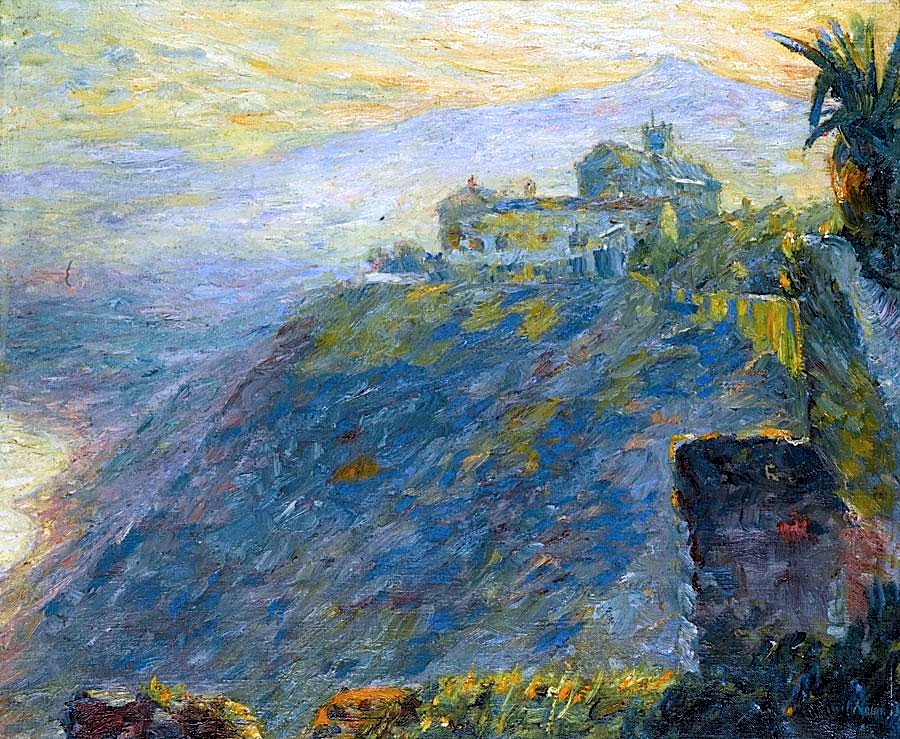
A Cloister at the Mountain Etna, 1905


Willows in Snow, 1907-1908


Heuwiese, 1907


Young Woman, 1907


Conversation in the Garden, 1908


The Blue Flowers, 1908


White Trees Trunks (1908)


Autumn sea VII (1910)


Marsh Bridge, 1910


Herbstmeer, 1910


Self-Portrait, 1912


Summer Clouds, 1913


Crocus Blossoms, 1914


Mondnacht (1914)


Vase mit Blumen, 1915


Sailing Boats (Silver Air), 1915


Red-Haired Girl, 1919


Marschlandschaft, 1920


Marschlandschaft (mit drei Häusern), 1920-1925


Dresden im Abendlicht, 1920


Flower Garden, 1922


Sunset, circa 1925


Orchideenzweig (Rote Rispen) 1925-1930


Blue Sky and Sunflowers, 1928


 Sky and Sea, 1930


Red and Yellow Cloud c.1930


 Reclining Female Nude, 1931-35

Marschlandschaft mit Bauernhof (1935 c.)


Friezen Homestead on the Canal, 1935


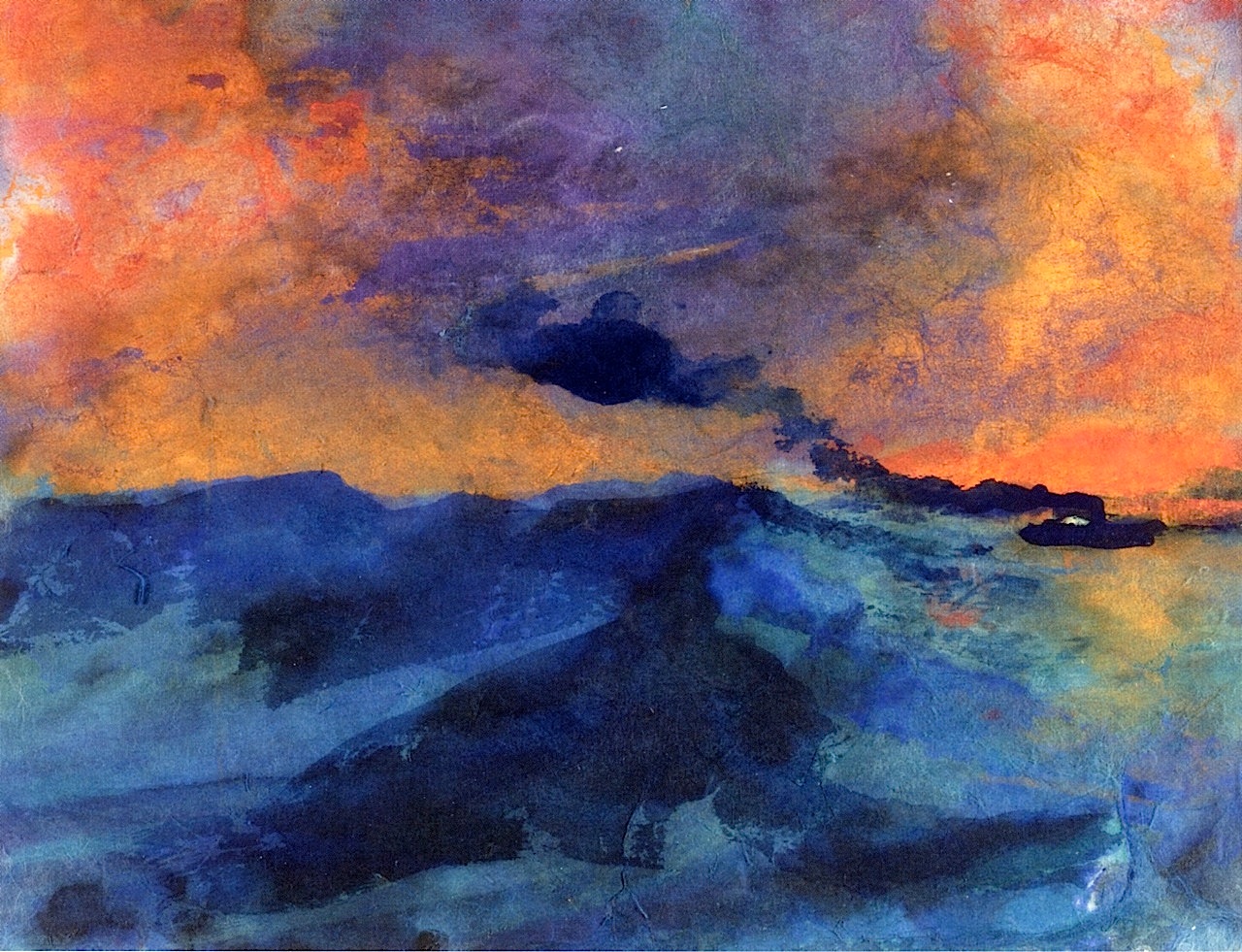
The Sea with Steamships under a Yellow Sky, circa 1935


Landschaft. 1935


Emil Nolde - Stilles Meer, 1936


Sunset over Blue Mountains, 1938-1945


Colored Sky Above Marais, watercolor, 1940


Half moon over the sea, 1945


Poppies and Lupins, 1946


 Sea with Violet Clouds and Three Yellow Sailboats, 1946


Light Sea, 1948


Gebirgslandschaft (1948)


Portrait of a Woman (Jolanthe Nolde) c 1950
watercolour on paper 49 x 35 cm


Dahlien und blaue Clematis,(c. 1950-54)
aquarelle on Japan paper


Starry Sky


Violette Berglandschaft


Evening Sea at Autumn


Violet Poppy


White blossoms


Streamboat


Highlands Landscape (also known as Two Women)


Junks (red)


Mountain Landscape (also known as Blue and Green)


Mountain Landscape (also known as Mountain Landscape with Snow and Firs)


Langensee (Lago Maggiore)


Friesenhäuser II


Rote und gelbe Sonnenblumen


Drifting Clouds

Emil Nolde (7 August 1867 – 13 April 1956) was a German painter and printmaker. He was one of the first Expressionists, a member of Die Brücke, and is considered to be one of the great oil painting and watercolour painters of the 20th century. He is known for his vigorous brushwork and expressive choice of colors. Golden yellows and deep reds appear frequently in his work, giving a luminous quality to otherwise somber tones. His watercolors include vivid, brooding storm-scapes and brilliant florals. Nolde's intense preoccupation with the subject of flowers reflect his continuing interest in the art of Vincent Van Gogh.
source: wikipedia